Nonprofit Financial Hub
Nonprofit Bridge Loans: A Complete Guide to Managing Cash Flow Gaps
Running a nonprofit means constantly balancing mission-driven work with financial realities. You’ve secured a major grant, but the funds won’t arrive for months. Your annual gala is coming up, but you need to pay vendors now. A critical program is ready to launch, but you’re waiting on donor commitments to come through.
Sound familiar? You’re not alone. Nearly 80% of nonprofits face cash flow challenges at some point, and these gaps can seriously impact your ability to serve your community. That’s where nonprofit bridge loans come in—a financial tool designed specifically to help organizations like yours maintain momentum when timing doesn’t align.
What You’ll Learn
- How bridge loans work for nonprofit organizations
- Common scenarios where bridge financing makes sense
- The application process and what lenders look for
- Real-world examples of nonprofits using bridge loans successfully
- How to choose the right financing option for your needs
What Are Nonprofit Bridge Loans?
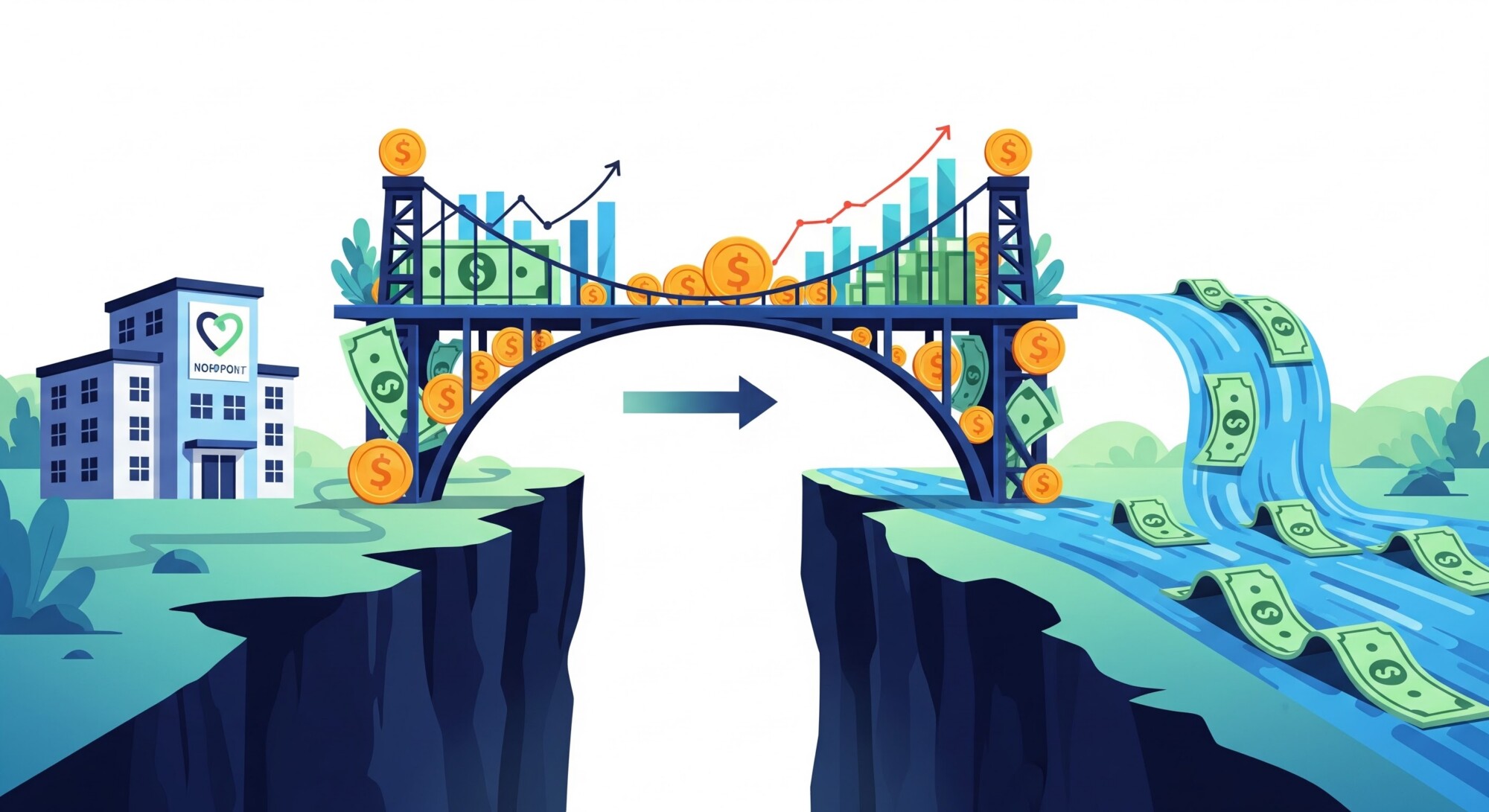
Think of a bridge loan as exactly what it sounds like—a financial bridge that helps you cross from where you are now to where the money is coming from. It’s short-term financing designed to cover immediate expenses while you’re waiting for expected revenue to arrive.
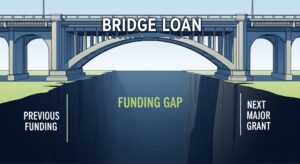
Unlike traditional nonprofit loans that might fund long-term projects or capital campaigns, bridge loans are specifically structured for temporary cash flow needs.
They typically range from a few months to two years, with repayment tied to your incoming funds.
Key Characteristics of Nonprofit Bridge Loans
- Short-term duration: Usually 3 to 24 months, matching your funding timeline
- Quick approval: Often processed in weeks rather than months
- Flexible structure: Can be secured against pledges, grants, or future revenue
- Mission-focused: Lenders understand nonprofit operations and constraints
- Variable amounts: From $25,000 to several million dollars, depending on your needs
Important Note: Bridge loans aren’t meant to fix fundamental financial problems. They’re strategic tools for organizations with solid finances who need to manage timing mismatches between expenses and revenue.
When Should Your Nonprofit Consider a Bridge Loan?
Bridge financing isn’t right for every situation, but it can be a game-changer in specific scenarios. Here are the most common use cases where nonprofits benefit from bridge loans:
- Delayed Grant Disbursements
You’ve received grant approval—congratulations! But there’s a catch: the foundation won’t release funds for another six months, and your program needs to start now. This is one of the most common reasons nonprofits seek bridge financing.
Real Example
A Florida-based educational nonprofit faced massive delays when the state postponed grant payments. With programs starting and staff to pay, they used a B Generous bridge loan to maintain operations. When state funds finally arrived, they repaid the loan immediately. As they put it: “B Generous stepped in when we had no other options. Their financing truly saved our organization.”
- Capital Campaign Funding Gaps
Capital campaigns are exciting but complex. You’ve got $5 million in pledges for your new community center, but donors are paying over three years while construction starts in six months. A bridge loan can help you break ground without waiting for every pledge to arrive.
- Gala or Event Advances
Your annual fundraising gala is projected to bring in $500,000, but you need to secure the venue, caterer, and entertainment months in advance. An event-based bridge loan lets you cover upfront costs with confidence, knowing the revenue is coming.
- Multi-Year Gift or Pledge Timing
A major donor commits $1 million over five years. That’s fantastic for your long-term budget, but you need capital now to expand programs. Bridge financing can convert those future payments into immediate working capital.
- Reimbursable Government Grants
Many government contracts reimburse expenses after you’ve already spent the money. If you’re running a $200,000 program but won’t get paid until completion, a bridge loan covers your costs during the project lifecycle.
- Critical Hiring or Equipment Needs
Sometimes opportunities won’t wait. A perfect candidate for your executive director role is available now. Essential medical equipment is on sale. A facility next door is suddenly for sale. Bridge loans give you the flexibility to act when timing matters.
- Unexpected Revenue Delays
A major donor’s pledge is delayed due to estate issues. A corporate sponsor postpones their annual gift. These situations can throw off your carefully planned budget, and bridge financing helps you maintain stability.
How Do Nonprofit Bridge Loans Work?
Understanding the mechanics of bridge financing helps you make informed decisions. Here’s what the process typically looks like:
The Application Process
Most nonprofit lenders, including B Generous, have streamlined their application processes. You’ll typically need to provide:
- Recent financial statements (990s, audited financials, or management reports)
- Documentation of expected revenue (grant awards, pledge letters, event projections)
- Board-approved budget showing how funds will be used
- Basic organizational information (mission, programs, tax-exempt status)
With B Generous, most applications take less than 30 minutes to complete, and you might receive a preliminary credit decision in as soon as a week from receipt of the completed application package and supporting documents.
Loan Structure and Terms
Bridge loans for nonprofits come in various structures:
Loan Size
Ranges from $25,000 to $100 million, depending on your organization’s size and needs
Interest Rates
Competitive rates designed for nonprofits from lenders who understand your mission-driven focus
Repayment Terms
Flexible options aligned with when your expected revenue arrives, from a few months to two years
Collateral
Depending on the individual circumstances, a bridge loan may be secured against future receivables, pledges, or organizational assets
What Lenders Look For
When evaluating nonprofit bridge loan applications, lenders typically consider:
- Clear repayment source: Documented evidence of expected revenue
- Financial stability: Your organization’s overall financial health
- Mission alignment: How the loan supports your charitable purpose
- Organizational history: Track record of financial management
- Reasonable timeline: Realistic projections for when revenue will arrive
The good news? You typically don’t need perfect credit or extensive collateral. Many nonprofit lenders understand that your assets are dedicated to your mission, not sitting in a bank account.
Benefits of Bridge Financing for Nonprofits
When used strategically, bridge loans offer significant advantages:
Maintain Program Momentum
Don’t let funding delays interrupt services to your community. Keep programs running, staff employed, and beneficiaries served without gaps.
Seize Time-Sensitive Opportunities
Whether it’s hiring exceptional talent, purchasing property, or expanding services, bridge loans give you the flexibility to act when opportunities arise rather than watching them pass by.
Improve Cash Flow Management
Smooth out the inevitable peaks and valleys in nonprofit revenue. Bridge financing helps you maintain consistent operations even when income arrives irregularly.
Avoid Emergency Measures
Without bridge financing, cash-strapped nonprofits sometimes resort to costly alternatives like:
- Putting expenses on high-interest credit cards
- Laying off valuable staff members
- Cutting programs or services
- Depleting reserves meant for emergencies
- Delaying vendor payments and damaging relationships
A well-structured bridge loan is almost always more cost-effective than these alternatives.
Build Organizational Capacity
Successfully managing bridge financing demonstrates financial sophistication to funders, board members, and partners. It shows you’re thinking strategically about cash flow and sustainability.
Success Story
“As a young nonprofit with limited collateral, we didn’t think financing was possible. B Generous proved us wrong and helped us secure the funding we needed to grow. They really were a godsend.” — Youth Homelessness Organization
Important Considerations
While bridge loans can be incredibly helpful, they’re not without considerations:
Cost of Borrowing
Bridge loans do come with interest and potential fees. You need to weigh the cost of borrowing against the cost of not having the funds. Often, the ability to maintain programs and seize opportunities far outweighs the financing costs.
Revenue Certainty
Bridge loans work best when you have high confidence in your expected revenue. If there’s significant uncertainty about whether the grant will come through or the donor will honor their pledge, reconsider whether bridge financing is appropriate.
Board Approval and Policies
Most nonprofits require board approval for significant financial commitments. Make sure your governance policies support taking on debt and that your board understands the strategic rationale.
Impact on Future Borrowing
Taking on a bridge loan creates a liability on your balance sheet. Consider how this might affect your ability to secure other financing or how funders might perceive it.
Bridge Loans vs. Other Financing Options
How does bridge financing compare to other nonprofit funding solutions?
Lines of Credit
A nonprofit line of credit works like a credit card for organizations. You’re approved for a certain amount and can draw on it as needed, paying interest only on what you use.
When to choose: If you face ongoing, recurring cash flow gaps rather than a one-time funding delay. Lines of credit offer more flexibility for managing regular fluctuations.
Term Loans
Traditional term loans provide a lump sum repaid over several years. They’re designed for longer-term needs like capital projects, equipment purchases, or major program expansions.
When to choose: For longer-term investments where you don’t have specific incoming revenue earmarked for repayment. Term loans work well for building purchases, major renovations, or endowment building.
Operating Reserves
If your nonprofit has built up operating reserves (typically 3-6 months of expenses), you might consider using these instead of borrowing.
When to choose: For smaller gaps or when you want to avoid borrowing costs. However, depleting reserves leaves you vulnerable to true emergencies, so many organizations prefer to preserve reserves and use bridge financing instead.
Accelerated Fundraising
Sometimes the answer is simply asking donors to pay pledges earlier or launching a special appeal.
When to choose: When you have strong donor relationships and the need isn’t urgent. However, constantly asking donors to accelerate gifts can strain relationships and isn’t always feasible.
How to Choose the Right Bridge Loan Partner
Not all nonprofit lenders are created equal. Here’s what to look for when selecting a bridge financing partner:
Nonprofit Expertise
Work with lenders who specialize in nonprofit financing. They understand your unique challenges, constraints, and revenue cycles. Traditional banks often struggle to underwrite nonprofit loans because they don’t understand pledge-based or grant-based revenue.
Transparent Terms
Look for clear, upfront information about interest rates, fees, and repayment terms. Avoid lenders who aren’t transparent about costs or have hidden fees.
Speed and Efficiency
When you need bridge financing, you usually need it quickly. Choose a lender with a streamlined application process and fast approval timelines.
Flexible Structure
Every nonprofit’s situation is unique. Look for lenders willing to customize repayment schedules, loan amounts, and terms to fit your specific circumstances.
Mission Alignment
The best nonprofit lenders see themselves as partners in your mission, not just transaction processors. They should care about your success and be willing to work with you if circumstances change.
No Personal Guarantees
Whenever possible, avoid lenders requiring personal guarantees from board members or executives on every loan. This creates unnecessary personal liability and can make board recruitment difficult.
Why Choose B Generous?
B Generous has emerged as America’s leading nonprofit lending marketplace, processing over $1 billion in loan requests from more than 30,000 nonprofits since launching in 2024. Here’s what sets us apart:
- No upfront costs or application fees
- Applications take less than 30 minutes
- Preliminary credit decisions possible in as little as 7-10 business days from receipt of fully completed application
- Loans from $25,000 to $100 million
- Usually, no personal guarantees are required
- Non-binding preliminary credit offers
- Competitive rates designed for mission-driven organizations
Real-World Examples of Bridge Loans in Action
Here’s how nonprofits across America are using bridge financing to advance their missions:
Healthcare Access Expansion

A healthcare nonprofit received a multi-million dollar grant to establish heart screening centers across America. The grant required matching funds and wouldn’t be distributed until specific milestones were met. A bridge loan allowed them to start construction immediately, hire staff, and order equipment while waiting for grant disbursements. The result? They opened six months earlier than planned, potentially saving thousands of lives.
Educational Continuity During State Delays
When an entire state experienced grant payment delays, one educational nonprofit faced closing its doors. They had contracts with the state, guaranteed funding, but bills due immediately. A bridge loan kept teachers employed, classrooms open, and students learning. When state funds finally arrived months later, they repaid the loan in full.
Capital Campaign Acceleration
A faith-based organization had pledges totaling $3 million for a new community center, but donors were paying over three years. Construction costs were rising, and delaying the project would mean significant budget increases. A bridge loan allowed them to break ground immediately, lock in contractor rates, and complete construction a year ahead of schedule.
Event-Based Financing
A women’s health nonprofit runs an annual gala that generates $600,000—their largest single fundraising event. Venue deposits, catering, and entertainment required $200,000 upfront, six months before the event. An event-based bridge loan covered these costs, and they repaid it immediately after the gala’s success.
Emergency Response Capability
When disaster strikes, nonprofits often need to respond immediately while waiting for emergency grant funding to arrive. One disaster relief organization used bridge financing to deploy resources within 48 hours of a major hurricane, knowing federal and foundation grants would reimburse them over the following months.
“We have to thank B Generous profusely for shepherding us through the loan process. Their advocacy and belief in our mission, and their expert advice and guidance made all of this possible. We simply can’t thank B Generous enough. All of the success we achieve from here on out is in large part due to them!”
— Welcome Baby Foundation
Tips for a Successful Bridge Loan Application
Maximize your chances of approval with these practical tips:
- Document Your Expected Revenue
The stronger your documentation, the easier approval becomes. Provide:
- Grant award letters with payment schedules
- Pledge cards or letters of intent from donors
- Historical event revenue for comparable past events
- Government contracts showing payment terms
- Multi-year giving agreements
- Be Realistic About Timing
Don’t promise unrealistic repayment timelines. If a grant typically takes 6 months to disburse, don’t claim you’ll repay in 3. Lenders appreciate conservative projections and understand nonprofit revenue can be unpredictable.
- Explain Your Use of Funds
Be specific about how you’ll use the bridge loan. “Cover operating expenses” is vague. “Pay three months of program staff salaries while waiting for state grant disbursement” is clear and compelling.
- Highlight Your Financial Management
Show you’re fiscally responsible:
- Clean audit reports
- Board-approved budgets
- Financial policies and procedures
- History of meeting obligations
- Conservative financial projections
- Prepare Your Board
Most lenders want board approval or at least board awareness. Brief your board about why bridge financing makes strategic sense and secure their support before applying.
- Ask Questions
Don’t hesitate to ask your lender questions. Reputable nonprofit lenders want you to fully understand terms, costs, and implications. If a lender is unwilling to explain things clearly, that’s a red flag.
- Consider Multiple Scenarios
What if your expected revenue is delayed further? What if a major donor reduces their pledge? Thinking through backup plans shows financial sophistication and helps you avoid problems later.
Common Questions About Nonprofit Bridge Loans
Do bridge loans hurt our nonprofit credit?
Actually, successfully managing a bridge loan can improve your credibility with lenders and funders. It demonstrates financial sophistication and responsible debt management. What matters is that you borrow responsibly and repay as agreed.
What if our expected revenue doesn’t arrive on time?
This is why choosing the right lender matters. Mission-aligned nonprofit lenders like B Generous understand that delays happen. Most are willing to work with you on extensions or modifications if circumstances change. Communication is key—reach out early if you anticipate problems.
Can newer nonprofits get bridge loans?
It’s more challenging but not impossible. Younger nonprofits typically need stronger documentation of expected revenue and may face higher rates or require more collateral. However, as one youth homelessness organization shared: “As a young nonprofit with limited collateral, we didn’t think financing was possible. B Generous proved us wrong.”
How much does a bridge loan cost?
Costs vary based on loan size, duration, organizational financial strength, and lender. However, nonprofit-focused lenders typically offer competitive rates because they understand your mission-driven purpose. At B Generous, the philosophy is clear: your money should power your mission, not financing fees.
Do we need collateral?
Not always. Many bridge loans are secured by the expected revenue itself—the grant, pledge, or event proceeds. Some lenders may require additional collateral, but nonprofit specialists understand your assets are dedicated to your mission.
How long does approval take?
With traditional banks, expect weeks to months. With specialized nonprofit lenders like B Generous, you can get a preliminary credit decision in about 7-10 days after submitting a fully completed application.
Will our donors and funders care that we took a loan?
Most sophisticated donors and funders appreciate strategic financial management. Using bridge financing to maintain program continuity during funding delays is a sign of good stewardship, not financial distress. Many nonprofits are transparent about bridge financing in their financial reports.
Making Bridge Loans Work for Your Nonprofit
Cash flow gaps are one of the most common challenges in nonprofit management. You’re doing everything right—securing grants, cultivating donors, planning events—but the timing doesn’t always align with your operational needs. That’s not a failure; it’s just the reality of nonprofit finance.
Bridge loans offer a strategic solution. They’re not about covering up financial problems or enabling poor management. Instead, they’re tools that let financially healthy organizations maintain momentum when timing creates temporary gaps.
The key is using bridge financing strategically:
- Only borrow when you have documented expected revenue
- Choose mission-aligned lenders who understand nonprofits
- Be conservative in your projections and realistic about timing
- Communicate openly with your board, lender, and stakeholders
- Have backup plans for various scenarios
When used wisely, bridge financing helps you focus on what matters most: advancing your mission and serving your community. It gives you the breathing room to operate strategically rather than reactively, to seize opportunities rather than watch them pass, and to maintain consistent programs rather than lurching between feast and famine.
Ready to Explore Bridge Financing for Your Nonprofit?
B Generous has helped thousands of nonprofits bridge cash flow gaps and maintain program momentum. Our streamlined application takes less than 30 minutes, with no upfront costs or application fees.
Whether you’re waiting on a major grant, managing pledge timing, or navigating event-based cash flow, we’re here to help. Our team understands nonprofit operations and can render a preliminary credit decision in about a week.
Disclaimer:
All examples, case studies, timelines, and cost calculations in this article are illustrative only and are not guarantees of terms, pricing, approval, or funding speed. Actual financing structures, interest rates, fees, and timelines depend on the borrower’s financial condition, documentation, collateral, and other underwriting factors. This content is provided for educational purposes and does not constitute financial, legal, or investment advice.