Nonprofit Financial Hub

Bridge Loans to Sustain Nonprofits
How Bridge Loans Sustain Nonprofits During Funding Gaps
We provide fast, nonprofit-first bridge financing, apply in under 20 minutes, to cover timing gaps between expenses and committed funding, so you protect programs, payroll, and momentum while funds clear.
When impact can’t wait
But while funds clear, Friday still comes. Your shelter’s payroll lands in 48 hours; the city reimbursement is 30 days out. If you miss it, 120 beds go dark this weekend and staff scatter. You can see the award letter, you just can’t spend it yet.
Or you’re a clinic: vaccine orders must be placed today, but Medicaid reimbursements trail visits by 45–60 days. Staff are booked, families are waiting, and your pledge payment arrives in 90. Lose momentum now, and you cancel 350 appointments next month. The funding is committed; the window to act isn’t.
That’s the paradox we see daily: strong programs, approved grants, signed pledges, yet cash isn’t here when you need it. This is a timing gap, not a mission problem. A disciplined bridge loan for Nonprofits, short-term financing matched to confirmed receivables, can protect programs and budgets. Next, we’ll unpack why gaps happen even in healthy organizations and how to choose the right tool.
Why funding gaps happen, even in well-run nonprofits
So why do those gaps appear even when your funding is real? Because revenue recognition (you’ve earned it on paper) often happens weeks or months before cash hits your bank. Pledges land on schedules, grant reimbursements pay after reporting, government contracts run on fixed cycles, and seasonal giving bunches up in December. Add partner delays, procurement checks, and audit/compliance reviews, and disbursements slow. The work is happening now. The money follows later.
Take a $500,000 award: you book it at signing, but cash arrives in three tranches over nine months. The first draw requires a countersigned contract, vendor registration, and approved invoice, each step adds days. Some agencies run monthly or biweekly check runs, and year-end closings pause payments. Foundations wait for grant agreements and reports before releasing installments. Even ACH (automated bank transfer) setups and portal testing can add 5–10 days. None of this is bad management. It’s process.
You’ll probably recognize one or more of these cash-gap sources inside your own workflow.
- Government reimbursement cycles paying 60–120+ days after services are delivered
- Approved foundation or corporate grants that disburse on fixed future dates
- Multi-year pledge campaigns with installments scheduled quarterly or annually
- Event revenue that settles weeks after vendors, deposits, and staffing costs hit
- Seasonal giving spikes at year-end against steady monthly payroll and rent
The real cost of waiting
When cash lags, you juggle payroll, push vendor checks, or pause programs. Emergency appeals tire donors and worry staff. Landlords, pharmacies, and partners start asking questions. One youth nonprofit we advised faced a 45-day city delay with two payrolls ahead; to “wait it out,” they froze hiring and cut hours. Within three weeks, after-school seats dropped by 28%, and parents scrambled. Rebuilding that trust took months, long after the reimbursement finally landed.
The financial math bites too. Late fees stack up, discount windows disappear, and you may forfeit matching funds. An arts group approved for a $200,000 grant couldn’t front a $50,000 venue deposit while the first installment processed; they lost the slot, then spent 20% more on a last-minute venue. Program continuity suffered, and the budget did too. Waiting looked cheaper on paper. It wasn’t.
Here are hidden costs we see leaders underestimate when they try to wait:
- Lost program days that are costly, and sometimes impossible, to make up later
- Late fees, missed early-pay discounts, and mid-season price increases
- Staff turnover driven by instability, overtime spikes, and burnout
- Turning down new grants or contracts you can’t cash-flow today
- Erosion of donor, partner, and community trust with each disruption
Why traditional fixes don’t solve the timing gap
Waiting for checks sounds prudent, but time is the most expensive line item when services stall. Cutting programs to “match cash” preserves budget optics while harming outcomes and morale. Smaller or newer nonprofits feel this most: thinner reserves and fewer unrestricted dollars mean less cushion to absorb lags. And when government payers stretch to 90 days, even well-run midsize orgs hit the wall. Equity matters here, access to capital should not depend on a decades-old balance sheet.
Emergency appeals work once; the fourth “urgent” email erodes loyalty. Bank routes can be great for buildings, not for 30-day gaps: collateral requests, long underwriting, and covenants stall decisions. By the time a traditional term loan is approved, your opportunity window is gone. Meanwhile, governance gets strained, boards are asked to approve cuts they don’t support or debt they don’t fully understand. You need something faster, scoped to a specific receivable, and designed for nonprofit realities.
So, what does the right tool look like? It must be fast, transparent, and anchored to funding you’ve already earned or been awarded.
- Fast access to funds aligned to verified receivables
- Transparent pricing with clear timeline and no surprise fees
- Underwriting that understands grants, contracts, pledges, and offers flexible terms
- Governance-friendly structure with clear repayment source boards can approve
- Low operational friction to apply, draw, and report
 Bridge loans: the mission-sustaining solution
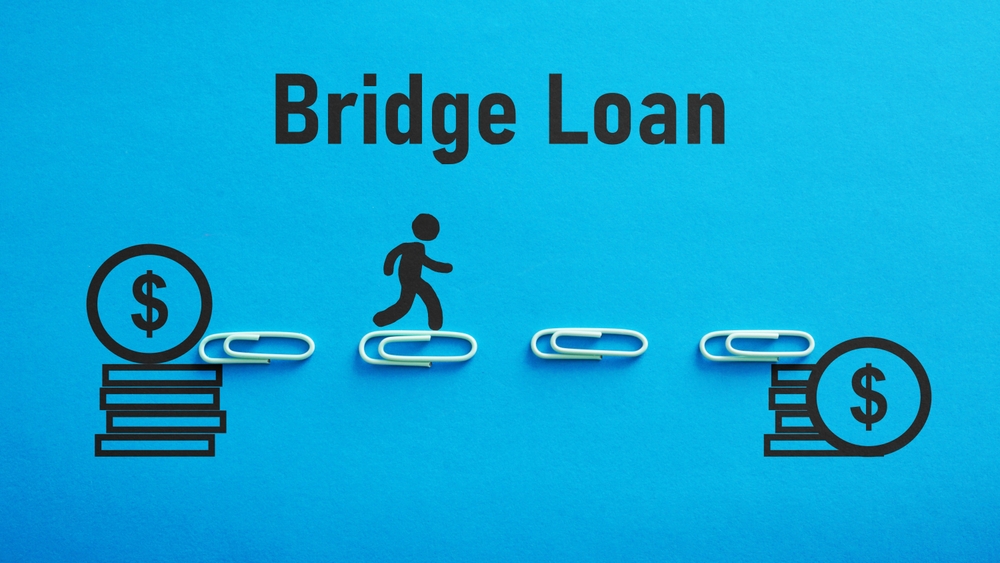
A nonprofit bridge loan is short-term financing that advances cash now against committed, near-term funding, think executed grant awards, pledge installments, or government reimbursements. You use it to start or sustain services while paperwork and payment cycles catch up. Repayment comes directly from the expected receivable, so the loan doesn’t linger on your books. Because it’s purpose-built, the term matches your timeline, often weeks to a few months, and the structure focuses on the award, not real estate or hard collateral.
That alignment preserves continuity. Programs launch on time, payroll runs without drama, and vendors are paid within agreed terms. You avoid the stop-start pattern that burns staff and confuses your community. The key is fit: size the loan to the receivable, pick a maturity with a buffer, and document the repayment path upfront. Used this way, a bridge is not “more debt”; it’s a timing tool that trades a known, short-term cost for avoided disruption and lost revenue.
We make the logistics simple: apply in under 10 minutes, pay no upfront costs, and access up to $10M when the case warrants it. Because our underwriting is built around grants, contracts, and pledges, you avoid the collateral maze and long bank timelines. The result is less friction and more continuity, so your team serves people, not paperwork.
💡
Why Bridge Loans Work
Speed to cash; aligned to receivables; flexible terms tailored to timing
Want specifics? Explore our Bridge Loans for Nonprofits to see structures, use cases, and eligibility at a glance.
How a bridge loan works, step by step
Here’s the low-friction path from first conversation to repayment, built for nonprofit speed and clarity.
- Initial fit conversation and documentation of receivables (grants, pledges, contracts)
- Streamlined application, under 20 minutes, with nonprofit-specific underwriting focused on award details
- Offer issued; board review and approval with transparent terms and repayment source
- Fast funding to cover payroll, vendors, launch costs, or program ramp-up
- Light-touch reporting and automatic repayment when the receivable funds arrive
- Review outcomes and, if helpful, set a revolving facility for future gaps
To accelerate approvals and keep costs down, prep these items before you apply.
- Centralize award letters, contracts, and reimbursement guidance with clear payment schedules
- Document each funder’s historical payment timing and reliability
- Align loan maturity with conservative funding-arrival estimates and add a buffer
- Prepare a short board memo summarizing purpose, amount, and the repayment source
 What success looks like across sectors
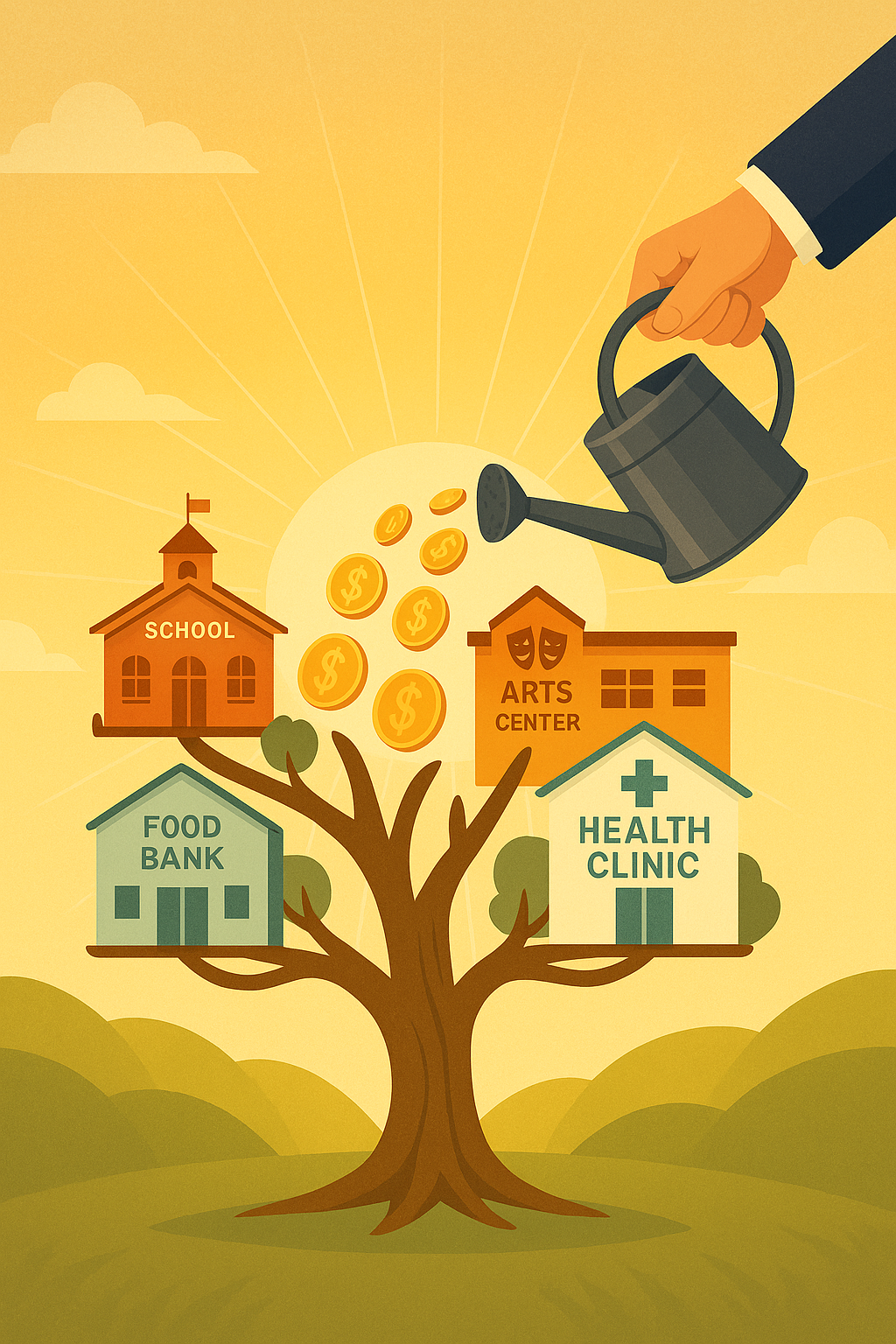
With your board memo in hand, what does this look like in practice? Three quick snapshots where a short bridge protects continuity, preserves lives served, and stabilizes budgets, so you can act now and repay when committed funds land.
- Human services: a shelter advances $180,000 to open 120 seasonal beds on June 1 while a city contract lags 45 days. Result: 5,400 bed-nights delivered, 0 closures, and 92% staff retention versus 68% during prior stop-start seasons.
- Health system: we bridge $750,000 while Medicaid (public insurance) pays 60 days late, keeping two urgent-care clinics fully staffed. Outcome: 1,100 visits maintained, zero overtime spikes, and drug suppliers paid on terms. See our hospital loans approach.
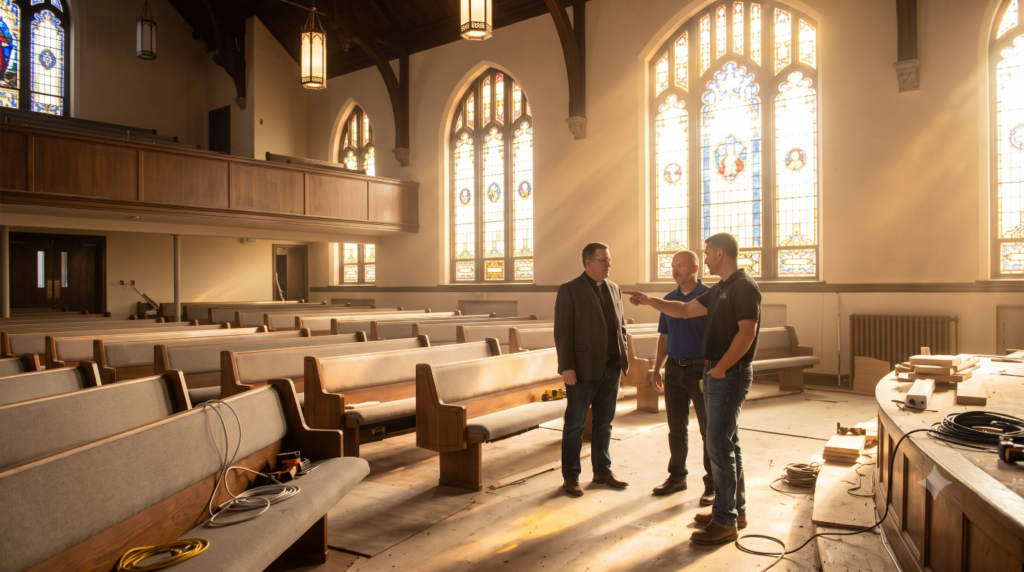
- Faith-based: a church advances $120,000 to cover facility utilities, food pantry deliveries, and a youth retreat while pledge installments land in 90 days. Impact: 2,800 meals served and programs on schedule. Explore tailored faith based loans when gifts are committed.
Costs, terms, and how to evaluate ROI responsibly
When gifts are committed or awards executed, the next question is simple: is bridging cheaper than waiting? Your cost is the interest, any one-time fee (origination, a setup charge), and the short term (usually weeks to a few months). Repayment comes from the receivable itself, first grant tranche, pledge installment, or government reimbursement. Compare that cost to avoided harm: program pauses, late fees, lost matches, staff churn. Quick thought experiment: if waiting risks a $25,000 match and $3,000 in penalties, a $6,800 financing cost is rational insurance. We’ll run this with you.
Use a break-even test: expected loss > financing cost. Translate expected loss into plain terms: amount at risk × probability of it happening. Example: a 14-day delay would forfeit an early-pay discount of $12,000 and cancel 200 visits worth $50 each ($10,000) with 70% likelihood. Expected loss is $15,400; if your total financing cost for the same window is $6,200, you green-light the bridge. Match maturity to the conservative receipt date, add a buffer, and document repayment from the award letter or contract. We can model this with you.
Use this quick checklist to confirm a bridge is prudent for your case.
- Is the funding highly probable and documented (award letter, contract, pledge)?
- Does the loan maturity match a conservative receipt date, with a buffer?
- Will the bridge prevent measurable disruption, fees, or lost matches you can quantify?
- Is board oversight documented? Minutes, a resolution, and a repayment plan?
Eligibility and documentation checklist
Since you’re prepping board oversight, minutes, a resolution, and a repayment plan, here’s the standard nonprofit lending checklist most lenders use; details vary by funder, but these documents get you to a fast yes.
- IRS determination letter (Internal Revenue Service tax-exempt approval) plus legal name, EIN (tax ID), address.
- Most recent financial statements (audit, review, or internal) and a 13-week cash-flow snapshot.
- Executed grant award letters, signed contracts, or pledge schedules showing amounts and payment timing.
- Board resolution or written authorization for borrowing, including purpose, amount, and repayment source.
- Last 3–6 months of bank statements, plus evidence of funder payment timeliness (past disbursement emails or reports).
- Program budget and a use-of-funds summary tied to outcomes (seats served, visits, beds, outputs).
Bridge loans vs other funding options
With your program budget and use-of-funds summary ready, the next call is tool selection: a quick bridge for a known receivable or a flexible nonprofit line of credit if gaps recur. Here’s how common options stack up so you choose confidently, and we’ll cover governance guardrails next.
| Option | What it is | Timeline to funds | Best for | Key risks | Typical cost |
|---|---|---|---|---|---|
| Bridge loan | Short-term advance against documented, near-term funding. | Days; often same-week after docs. | Known receivables: grants, pledges, government reimbursements. | Funding arrives late; unclear repayment plan; board oversight gaps. | Short-term interest; fees vary; no upfront costs. |
| Nonprofit line of credit | Revolving limit you draw and repay repeatedly. | Days–weeks, depending on underwriting and limits. | Recurring smaller gaps; flexible, multi-use working capital. | Covenants, annual renewal, unused line fees possible. | Interest only on amounts outstanding; small annual fees. |
| Grant/pledge advance | Advance against awarded grants or signed pledges. | Weeks–months; legal reviews and documentation. | Large, specific awards with firm schedules. | Contract constraints; donor optics; slower setup. | Varies by structure; may include fees. |
| Bank term loan | Fixed, multi-year borrowing for long horizons. | Weeks–months; longer underwriting and approvals. | Capital projects, vehicles, renovations, expansions. | Collateral, covenants, slower decisions; prepayment penalties. | Lower rates; longer commitments and closing costs. |
| Invoice/receivable factoring | Sell receivables to a third party. | Days–weeks after account verification. | Fee-for-service or commercial receivables. | Higher effective cost; funder relationship concerns. | Discount rate plus per-invoice fees. |
Risk management and governance best practices
Fees, like discount rates and per-invoice charges, are only half the story; governance turns short-term borrowing into a safe tool, use these safeguards we coach boards to adopt.
- Adopt a borrowing policy that defines allowable uses, limits, approval thresholds, and reporting cadence.
- Tie every draw to a documented receivable and a program outcome, with the repayment source named.
- Use conservative funding timelines, add 15–30% buffer days, and maintain a minimum 30–60 days cash reserve.
- Report quarterly to the board: draws, repayments, covenant status (agreed performance thresholds), and impact protected (seats, visits, bed-nights).
- Stress-test repayment with 15, 30, and 60-day delays; pre-approve contingencies like expense holds or alternate receivables.
How B Generous supports nonprofits end-to-end
You just stress-tested repayment with 15, 30, and 60-day delays and pre-approved contingencies, now you need a lender built for that discipline. That’s us. B Generous moves fast (application under 10 minutes), underwrites to nonprofit realities, grant awards, government contracts, and pledge schedules, and can fund up to $10M with no upfront costs. Our terms are transparent, our fees are plain-English, and structures match your receivables and program timelines. The goal is simple: protect impact today and repay cleanly when funds land.
How does that feel in practice? Think decisions in days, same-week funding when documents are ready, and a team that helps assemble board-ready memos, cash-flow views, and repayment plans. We model cost versus impact with you, so you can quantify avoided late fees, preserved match dollars, and seats served. From first draw to final repayment, you get nonprofit-aware support, clear updates, and planned check-ins, capital aligned to mission outcomes, not just balance sheets. You stay focused.
🚀
Check Eligibility in Minutes
Answer a few questions and see your options in minutes, no upfront costs, no obligation.
Get your mission the runway it deserves
Just explored our bridge loans? Let’s turn that into action. You’ve seen how timing gaps happen, reimbursements 30–90 days out, matches closing in 14, payroll due in 48 hours. Waiting costs seats, fees, and momentum. A short, documented bridge tied to your grant, pledge, or contract keeps services running and repays from the first disbursement. Next steps: check eligibility, pull 3–5 core docs, and run our ROI worksheet. Apply in under 10 minutes; no upfront costs. We’ll walk you through board-ready language.
Prefer to compare options first? Book a quick consult to decide between a one-time bridge and a recurring Nonprofit line of credit for repeat gaps. For example, a 6-week bridge that protects a $25,000 match and 1,100 clinic visits often costs less than late fees and lost impact. We’ll model your case, size terms to confirmed receipts, and build buffers. When you’re ready, start your application or share the toolkit with your finance chair to brief the board.
See all nonprofit financing solutions
or
Disclaimer:
All examples, case studies, timelines, and cost calculations in this article are illustrative only and are not guarantees of terms, pricing, approval, or funding speed. Actual financing structures, interest rates, fees, and timelines depend on the borrower’s financial condition, documentation, collateral, and other underwriting factors. This content is provided for educational purposes and does not constitute financial, legal, or investment advice.