Nonprofit Financial Hub

Sponsorship as a Funding Strategy for Nonprofits
The Quiet Funding Lever Nonprofits Overlook
If “sponsorship” makes you think banners and gala tables, you’re not wrong, but you might be missing the quiet lever that could fund your next launch. Financing sponsorship, pledges (written donor commitments) and guarantees (a backstop promise to cover part of a loan), can unlock credit. Last quarter, we watched a youth nonprofit with $700k in committed gifts pause a program because a lender still saw too much risk on paper.
With one sponsor letter covering three months of interest or a 50% guarantee, underwriting often clears in days, not weeks. Rates can drop 150–300 bps (basis points; 1 bp = 0.01%), and limits may rise. That’s the difference between pausing and proceeding. So, what do we actually mean by sponsorship in a financing context?
📊
Data Point
We see 1 in 3 programs delayed by cash-flow gaps; a simple interest sponsor or 50% guarantee often halves approval time and trims rates by 1.5–3.0 points.
What Sponsorship Really Means in Nonprofit Financing
If an interest sponsor or 50% guarantee can cut approval time and cost, what exactly counts as “sponsorship” here? Marketing sponsorship buys visibility, logos, tables, mentions. We use “financing sponsorship” to mean support that reduces your cost of capital and risk. A sponsor pledges cash to cover interest, creates a reserve to absorb first loss, or signs a guarantee (a backstop promise to repay if needed). You still borrow for a repayable need; grants and gifts still fund mission. This aligns your supporters with safer, faster access to capital.
Think of it like a fare subsidy for the bus you already run: the route doesn’t change, but the ride gets cheaper and safer. Example: you take a $1,000,000 bridge for 3 months at 10% annual rate (APR, the yearly borrowing cost). Gross interest is about $25,000. A donor covers that interest, so your effective cost is near zero while programs start on time. Or a foundation guarantees 50% of principal, and your rate drops 150–300 basis points (0.15–0.30 percentage points) with a faster approval.
Key terms in plain English: Pledge of cash or marketable securities means a donor commits funds or easily sold assets to cover specific costs. Loan guarantee is a formal promise to repay if you can’t. Collateral is an asset held as security now; a guarantee is a promise without transferring assets. First-loss reserve is a small pot that absorbs initial losses. Releases happen when the loan is repaid. Docs include: sponsor pledge/guarantee, restricted gift letter, board resolution, and reporting plan.

The Gap Between Need and Cash: Where Plans Stall
Sound familiar: a grant is awarded in April, but the disbursement lands in July, while your program starts in May. Major gifts are pledged over 12 months, yet vendors need deposits today. Earned revenue is seasonal, camp tuition in spring, ticket sales in Q4, while payroll is weekly. Meanwhile, the bank asks for three years of audited statements and a 1.25x debt service coverage ratio (DSCR, cash flow divided by annual debt payments) that small and midsize nonprofits rarely show mid-season, even with signed awards and waitlists.
Government contracts reimburse on net-60 to net-120 terms (60–120 days after service), so expenses pile up before cash arrives. Pledge schedules often backload, 30% now, 70% in December, missing summer or fall starts. Restricted gifts can’t cover interest or bridge fees without explicit intent, so you pause to “protect” the budget. Larger lenders want collateral or unrestricted reserves many boards won’t encumber. You’re creditworthy on paper over the year, but not on the exact weeks you need to hire staff, book buses, or order materials.
When cash lags, services slip. You postpone classes, miss enrollment windows, and lose momentum with families who needed you now. Vendors tighten terms after late payments, so future deposits get bigger and timelines stretch. Staff scramble to reschedule, burning time and trust. The reputational hit is real: partners hesitate to co-brand, funders question readiness, and beneficiaries drift to alternatives. All avoidable if timing matched demand.
The Cost of Waiting: Momentum Lost, Impact Deferred
Delays don’t just push dates, they compound costs and erode confidence across your budget, team, and community. Here’s where that shows up fast and painfully.
- Higher project costs from inflation, expiring quotes, and vendors repricing when schedules slip.
- Lower beneficiary retention when enrollment windows close or families choose alternatives.
- Staff burnout as programs lurch between feast and famine, then rush to catch up.
- Strained funder confidence after missed milestones and re-baselined timelines.
- Opportunity cost from missing pilot windows or expansion slots when partners are ready.
Sponsors change “not yet” into “go now” by covering interest, pledging reserves, or guaranteeing risk, without loosening financial discipline or skipping board oversight. Ready to see the mechanics and the math? Let’s map how a sponsor-backed line or bridge actually flows.
 How Financing Sponsorship Unlocks Affordable Capital
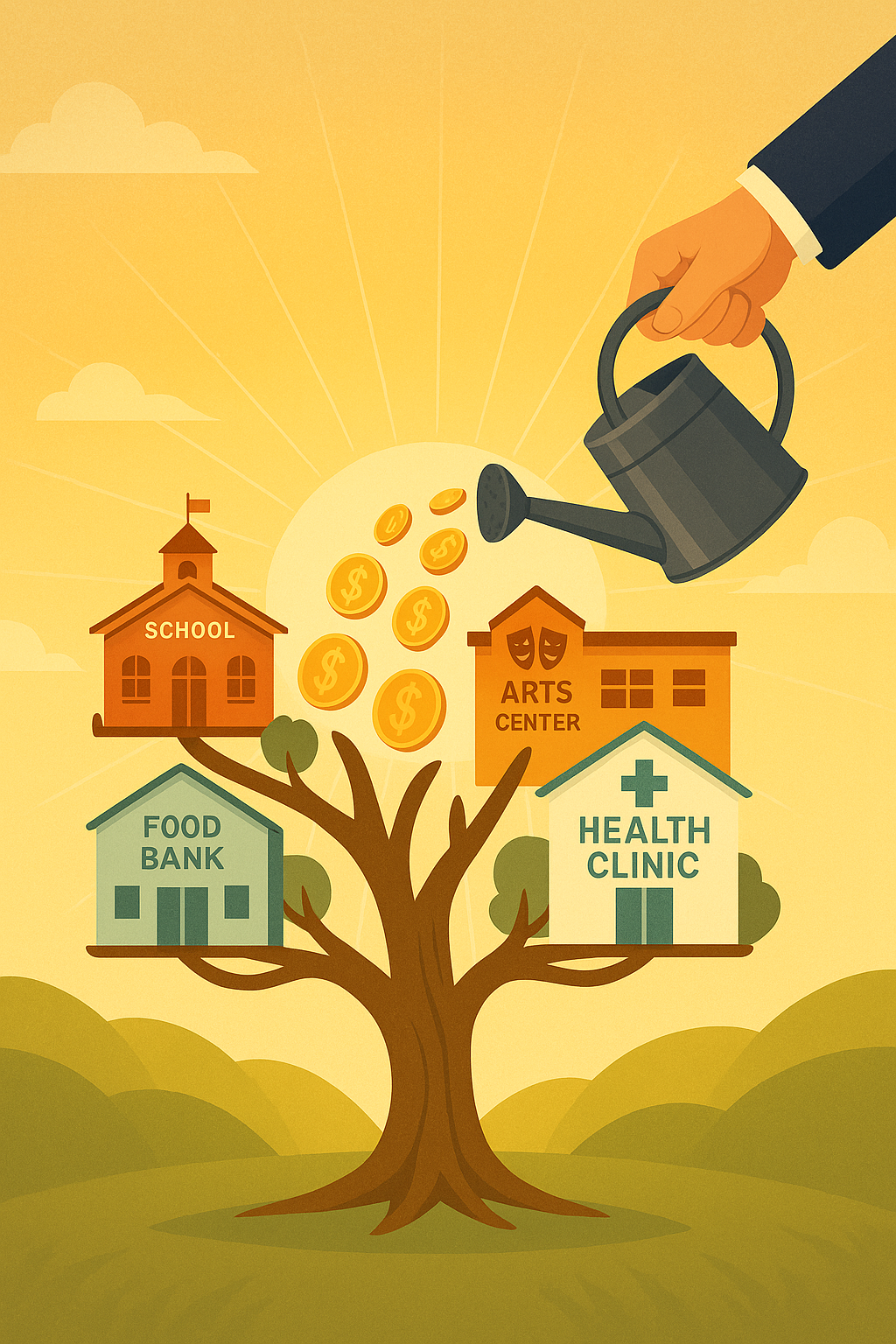
You just asked for the mechanics, so let’s map them. When a credible sponsor covers interest, pledges a reserve, or guarantees part of the loan (a backstop promise to repay if needed), our risk drops. Lower risk drives faster underwriting, better rates, and sometimes higher limits. You still lead the borrowing: you apply, you draw, you repay from grants, contracts, or pledges. The sponsor doesn’t run the loan; they stand behind it to reduce loss probability and cost. That’s how sponsorship unlocks affordable capital without slowing your mission.
Simple example: a $1,000,000 bridge for 3 months at 10% APR (annual percentage rate) carries about $25,000 of interest. If a donor sponsors the interest, your effective borrowing cost drops near zero while programs start on time. Or a 50% guarantee can trim 150–300 bps (basis points; 1 bp = 0.01%) and speed approval from weeks to days. Either way, you remain the borrower and operator; the sponsor backstops so the math and timing work.
Here’s the straightforward path from need to funded. We keep it practical and board-friendly so you can move fast without surprises.
- Size the gap and repayment source; build a simple cash-flow model showing amount, timing, use, and payback.
- Identify and pre-qualify mission-aligned sponsors and their appetite for interest coverage, reserves, or guarantees.
- Choose structure: interest pledge, cash/securities pledge, first-loss reserve, or full/partial guarantee based on risk.
- Submit your B Generous application with sponsor letter, restricted gift language, or guarantee agreement plus cash-in evidence.
- We close quickly; funds draw to your line or bridge and deploy to payroll, vendors, or deposits as planned.
- Repay from grants, pledges, or contracts; on payoff and covenant compliance, the pledge or guarantee is released.
⚠️
Important Risk Note
If the borrower defaults, the sponsor may be obligated per the agreement. Seek legal/financial counsel and secure transparent board approval.
Pledge vs. Guarantee: Which Structure Fits Your Case?
Use this quick guide to compare obligations, best-fit scenarios, and release conditions so you can choose with clarity.
| Structure | What it is | Best when | Sponsor obligation | Release conditions |
|---|---|---|---|---|
| Cash/Securities Pledge | Sponsor pledges cash or marketable assets as security under a control agreement. | You’re creditworthy but need extra security to improve rate or limit. | Assets may be used to cure missed payments according to the pledge terms. | Released in full at payoff and after meeting all covenants. |
| Full Personal/Entity Guarantee | Sponsor promises to repay up to an agreed amount if the nonprofit defaults. | Collateral is thin, but repayment source is predictable and documented. | Guarantor covers missed payments up to the guarantee cap per the agreement. | Guarantee ends at payoff or steps down at negotiated milestones. |
| Foundation PRI-Style Guarantee | Mission-aligned guarantee from a foundation using program-related investment tools. | High-impact initiatives with thin collateral or early-stage partnerships need credibility. | Similar to a guarantee; may include additional reporting and learning goals. | Typically released at payoff; some programs include specific covenants. |
Who Can Sponsor, and Why They Say Yes
Here are the common sponsor profiles, and the motivations that make them say yes when speed and accountability matter.
- Board members with deep mission alignment and capacity to underwrite timing with strong governance.
- Major donors seeking catalytic, recyclable impact by covering interest or guaranteeing a portion.
- Foundations using guarantees or PRIs (program-related investments) to amplify program reach.
- Corporate partners aligning CSR (corporate social responsibility) with measurable outcomes and stewardship.
- Faith community leaders backing time-sensitive initiatives with interest sponsorship or reserves.
Sponsors gain leverage, each $1 can unlock $10+ of delivery, plus values-aligned recognition and transparent reporting. They should understand obligations, seek legal/financial advice, and document intent clearly. Next, see how this plays out in a real program timeline.
Scenario: A Sponsor Turns Next Year into This Quarter
So how does that play out in real time? Your youth nonprofit needs $500,000 to start tutoring three weeks before school starts. Awards are signed, but the grant funds in October and the district pays net-60 (about two months). Underwriting stalls because unrestricted cash is tight. A board member offers a 50% guarantee, capped at $250,000. We paper a limited guarantee and restricted gift letter, then rerun the model. The rate drops from 11.5% APR (annual percentage rate) to 9.8% APR, and the approval window shrinks. A 90-day bridge closes in six business days, so you hire, book space, and launch on time.
Timeline looks like this. Day 1: you apply (under 10 minutes). Day 3: sponsor letter finalized. Day 6: credit approved and documents out. Day 8: funds land. You draw $420,000 at launch and $80,000 in week two. Programs serve 650 students in September, rather than waiting until November. Repayment is straightforward: October grant proceeds plus the first district payment clear the balance in week 9. We confirm covenants, post payoff, and release the guarantee the same day. No reserves were touched, and your team keeps momentum into fall.
✅
Results
Launched 3 weeks early; avoided ~$35k delay costs; 650 students served; guarantee released at payoff.
 Build a Resilient Capital Stack with Sponsorship
That on-time launch, the ~$35k saved, and a released guarantee? That’s the playbook to run year-round. Use a sponsor-backed term loan (a fixed-period bridge) when one known inflow will repay, think awarded grants, signed contracts, or year-end gifts. Use a revolving tool (a reusable credit line) to smooth ongoing bumps, payroll before reimbursements, event deposits, or seasonal dips. Match each draw to its payback: short-term funds repay with the specific grant or contract; recurring gaps revolve and clear monthly or quarterly. Lower risk, lower cost. Simple.
Two quick patterns we model with you. Grant bridge: $600k awarded in March, funds land in June; you draw for 60–90 days, sponsor covers interest, grant retires the balance on arrival. Receivables cycle: government reimbursements pay net-60 to net-90; a revolving line covers payroll weekly, then auto-pays down as checks hit. Big launches (camps, clinics, exhibits) often blend both: bridge the upfront build, then use the line for rolling expenses. Right tool, right term.
Pair sponsorship with our Bridge Loans for Nonprofits to launch ahead of cash arrival: donors cover interest, or guarantee first loss, while pledged grants or signed contracts repay on schedule. That keeps your effective cost near zero and your timeline intact.
A sponsor can also help you open or right-size a nonprofit line of credit by pledging a reserve or partial guarantee, reducing rates and increasing limits. Then you draw for weekly gaps and clear balances as reimbursements and monthly gifts arrive.
Governance and Risk Checklist Before You Proceed
Before you draw on a sponsor-backed line or bridge, this checklist speeds approval, prevents surprises, and protects relationships with your board, auditors, and donors.
- Build a 13-week cash flow with base and downside cases (e.g., grant delays 60–90 days) and show exact draw and payback timing.
- Name repayment source and proof: award letters, contracts, pledge schedules; set cadence weekly early, monthly later, with triggers if inflows slip.
- Have counsel review pledge, guarantee, and gift language; translate obligations in plain English and confirm release conditions and caps.
- Screen for conflicts if the sponsor is a board member; document recusal, independent review, and minutes for the vote.
- Set reporting: monthly balance, rate, interest sponsored, days to repayment, and program outputs; quarterly board summary with variances and actions.
- Define contingencies if a call triggers: sponsor step-in, draw freeze, budget trims, backup repayment (e.g., reserve release), and communication script.
📝
Governance Reminder
Record decisions in board minutes, attach draft documents, and capture donor intent in restricted gift language. Align uses with restrictions, and keep acknowledgments clear of benefits that imply a financial return.
How to Approach and Secure a Sponsor Without Awkwardness
With governance, intent, and acknowledgments squared away, here’s a respectful, transparent outreach flow that gives sponsors options, keeps mission first, and makes the ask feel clear, not transactional.
- Step 1: Map alignment – Link $X to Y outcomes; confirm interest vs. guarantee; set cap/term (e.g., $100k, 90 days) and recognition preferences.
- Step 2: Socialize – Float the idea on a 10-minute call; gauge risk comfort, decision process, and timing; ask to send a one-pager before formal request.
- Step 3: One-page – State need, amount, structure, repayment source, and timeline; include math (rate, term, interest covered) and sponsor options; one page, no jargon.
- Step 4: Offer options – Interest sponsorship, first-loss reserve, or partial guarantee; show tiers (e.g., $25k, $50k, $100k) and terms (60–180 days); no financial return implied.
- Step 5: Outline safeguards – Share downside case (e.g., 60-day delay), covenants, exit triggers; specify guarantee caps, release conditions, reporting cadence; commit to board transparency.
- Step 6: Close well – Confirm documents, caps, and release; send thank-you within 24 hours; align recognition to policy; schedule first report and impact update.
✉️
Email Script Prompt
Subject: Underwrite 60 days of impact? Two lines: the program, timing gap, repayment source. Offer options (interest sponsorship or partial guarantee), state cap/term, risks (delay scenario), and exit conditions. Ask for a 15-minute call and permission to send a one-pager.
Measure What Matters: KPIs for Sponsor-Backed Financing
You sent the one-page and booked the 15-minute call, now back it with numbers. Tracking KPIs (key performance indicators) reassures sponsors, strengthens board confidence, and earns faster, cheaper capital the next time you need to move.
| KPI | Why it matters | Target/Benchmark | Data source |
|---|---|---|---|
| Time-to-launch (days) | Proves speed from approval to impact | < 60 days from approval | Project plan and PM (project management) tool |
| Beneficiaries served (#) | Links capital to mission outcomes | Meet or exceed plan | Program attendance and service reports |
| Unit cost vs. plan | Shows fiscal discipline and operational control | At or below plan, within ±5–10% | Finance system and budget variance reports |
| On-time repayment (%) | Builds lender and sponsor confidence | 100% on-time across all draws | Loan statements and amortization schedule |
| Sponsor reporting cadence | Maintains trust, transparency, and stewardship | Monthly operational; quarterly impact summary | Board packets and sponsor updates |
| Cost of delay avoided ($) | Quantifies the value of speed | Calculated against the no-finance scenario | Finance records plus vendor quotes |
Bring Your Community Along (Without Overpromising)
Those finance records and vendor quotes you just assembled to quantify savings are your story tools. How do you share them without confusing people? Explain it simply: a sponsor underwrote interest (the borrowing cost), which let you start sooner without using program dollars. Catalytic, not a blank check. Set boundaries upfront, board-approved caps, term, and release conditions, and confirm recognition preferences, including anonymity. We avoid implying any financial return; recognition is gratitude and impact reporting, not benefits that look like compensation. That’s how you protect trust while celebrating what the sponsorship made possible.
What does that look like publicly? Example: “A partner covered three months of interest so we could launch 60 days earlier, no program funds used for fees.” Privately, send a one-page impact note with beneficiaries served, days accelerated, and dollars saved (e.g., 650 students, 21 days, ~$35k). Recognition tiers can be annual report line, event slide, or anonymous; avoid naming rights on guarantees or reserves. If “debt” language is sensitive, say underwriting assistance or risk-sharing. We’ll share faith-aligned phrasing next.
For stewardship cadence, campaign calendars, thank-you scripts, and update templates, explore our fundraising resources. Next, we’ll adapt the language for faith-based communities.
Faith-Based and Mission-Led Organizations: Special Considerations
As promised, let’s adapt the language for faith-based communities. Start with approvals: have elders/board adopt a short loan policy addendum, require two signatures, document recusal if a sponsor is a leader, and record donor intent as a restricted gift for financing costs. Communicate with the congregation in plain English, “underwriting assistance” (covering interest or a small reserve) accelerates ministry without implying any financial return. For reputational care in close-knit communities, set caps ($25k–$250k), short terms (60–180 days), and clear release conditions before any personal guarantees are considered.
Two patterns tend to fit values and optics. Example 1: Interest sponsorship, on a $300k, 90-day bridge, a donor covers ~$7,500 in interest, the board minutes the restricted gift, and the project opens six weeks earlier. Example 2: First-loss reserve, 5% on a $500k line ($25k) held in a segregated account; unused funds return at payoff. Use recognition that feels right (annual report line, anonymous), and avoid naming rights on guarantees. Always offer confidentiality and a 30–60 minute briefing for questions.
Prefer a pre-vetted path? Our faith based loans pair seamlessly with sponsor-backed interest coverage or reserves, lowering cost and signaling strong governance; we’ll model the blend and get you to a clear yes/no fast.
Ready to Map Your Sponsorship-Backed Financing Plan?
Want that pre-vetted path and a clear yes/no fast? Let’s map it together. Sponsor-backed financing speeds launches because a partner covers interest, pledges a small reserve, or guarantees part of the loan, dropping risk, rate, and time. With B Generous, you can apply in under 10 minutes, access up to $100 million, and pay no upfront costs. You stay focused on mission; we handle the mechanics.
Pick the path that fits your readiness. Apply now for a right-sized line or bridge; we’ll underwrite against grants, contracts, and pledges, then close in days to a couple of weeks. Prefer a quick gut check? Book a 15-minute structure modeling call. If you’re weighing board comfort, we’ll walk through the checklist. Not ready to talk? Download the toolkit, governance checklist, sponsor outreach one-pager, and ROI calculator, then come back with numbers in hand.
The best starting point is our nonprofit financing solutions, where you can compare lines of credit, bridge loans, and sponsorship layers, and get guidance tailored to your cash flow.
Disclaimer:
All examples, case studies, timelines, and cost calculations in this article are illustrative only and are not guarantees of terms, pricing, approval, or funding speed. Actual financing structures, interest rates, fees, and timelines depend on the borrower’s financial condition, documentation, collateral, and other underwriting factors. This content is provided for educational purposes and does not constitute financial, legal, or investment advice.