Nonprofit Financial Hub

3 Tips for Securing Working Capital with a Nonprofit Loan
The 60–90 Day Cash Gap That Stalls Missions
Why does working capital matter so much? Because the 60–90 day gap is real. We see this every week. Picture this: your grant award letter is signed, but the foundation won’t release funds for another 90 days. Payroll hits Friday, rent next week, and program vendors want deposits now. Your budget is balanced for the year, your programs are thriving, and yet cash is stuck, some of it even restricted (earmarked for specific uses). Momentum doesn’t run on promises. It runs on working capital.
Now comes the call you dread: pause services or push ahead without the cash in hand. We know the weight of that decision. A pause means clients wait longer, outcomes slip, and staff hours get cut, risking turnover you can’t afford. Pushing ahead risks late fees and strained vendor relationships. You’re solvent (financially healthy on paper), but not liquid (short on immediate cash). The difference decides whether camps run, clinics open, or that community meal happens this week.
Nonprofit Finance Fund (NFF) surveys consistently show about half of nonprofits operate with three months or less of cash on hand. Pair that with reimbursements that routinely arrive 60–120 days after service, and you get the crunch you’re feeling. So why is it getting tougher this year, seasonality, inflation, and slower processing? Let’s unpack the why now next.
Why working capital is the nonprofit’s most fragile resource right now
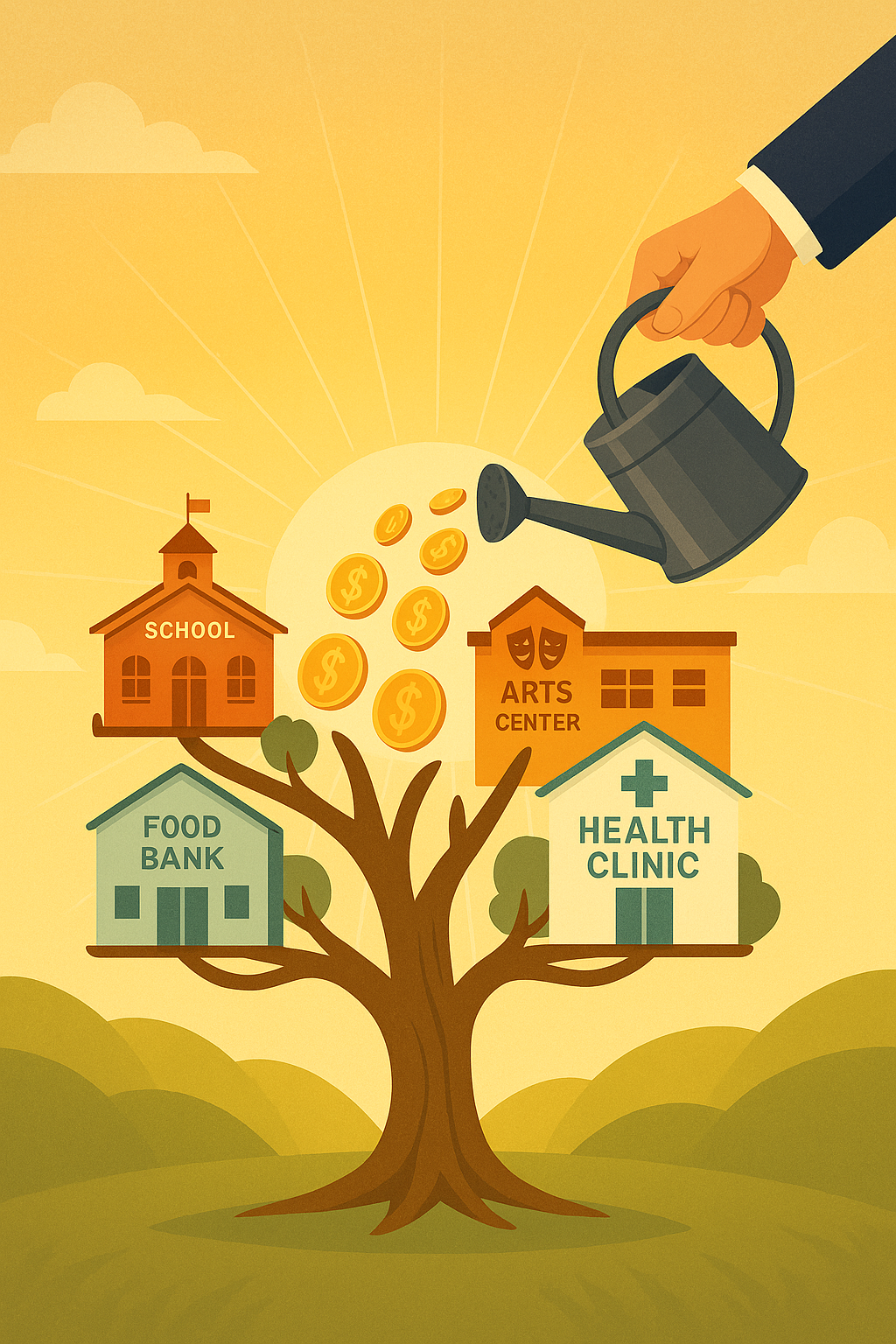 You asked why it’s getting tougher this year, seasonality, inflation, and slower processing all add up. Reimbursement grants (you spend first, get paid later) create 60–120 day delays. Seasonal giving concentrates cash in Q4 (October–December), then dries up in spring. Pledges often pay on schedules you can’t accelerate. And restricted funds (earmarked dollars you legally can’t redirect) can’t cover payroll or rent. Meanwhile, demand is up, wages are rising to retain talent, and vendor prices climbed. Strong mission, volatile cash. That’s the tension you’re managing.
Now layer in real-world timing mismatches. Payroll is biweekly; many grants pay quarterly. Event deposits are due 90 days out; sponsorships clear 30 days after the gala. Board-approved reserves (savings set aside by policy) may be limited or require a vote to use. So cash exists, but it’s either restricted, future-dated, or fenced off. The result: a healthy budget on paper, but a thin runway in practice. The question isn’t if revenue is coming. It’s whether it arrives in time to meet this month’s obligations without stalling programs.
Nonprofit Finance Fund reports roughly half of nonprofits operate with under three months of cash on hand. Independent Sector surveys echo widespread payment delays. When leaders “wait it out” instead of securing bridge financing, operational risk spikes, missed services, staff churn, and forfeited revenue.
The undersupply of bank-friendly nonprofits (and the myths that cause it)
Traditional underwriting often misses nonprofit realities. Restricted vs. unrestricted revenue (earmarked vs. flexible dollars) gets blurred, so a strong grant pipeline can be mistaken for available cash. Concentration in a few reputable funders can spook lenders, even when those relationships are long-standing and documented. Collateral is overweighted, penalizing organizations that invest in people and programs rather than buildings. And “mission risk” (serving a vulnerable population) is misread as “industry risk” (a failing business model). We also see double-counting errors: a $300,000 restricted grant appears as revenue and as an account receivable, then is treated like usable liquidity, when it’s not.
Credit boxes (the fixed rules lenders must follow) can be rigid: ratio tests at a single month end ignore your seasonal swings and pledged receivables. A debt service coverage ratio (cash available to pay debt) measured in your slowest quarter tells the wrong story. Days cash on hand on June 30 rarely proves how you manage October’s surge and February’s dip. Governance strengths are overlooked too, clean audits, segregation of duties, and engaged boards should lower risk, but they’re not weighted enough. The net effect: capable nonprofits are labeled “not bankable,” not because they’re weak, but because the lens isn’t built for how you operate.
Here are the recurring pain points we help you name, and quickly clarify, with traditional lenders:
- Restricted revenue: Grant-tied dollars get misread as usable cash; show a clear restricted/unrestricted breakout and cash flow timing to correct it.
- Grant timing: Reimbursements land after expenses, not before; map service dates to payment dates so financing covers the gap, then self-liquidates.
- Collateral bias: Facilities-light orgs look riskier on paper; emphasize receivables quality, funder history, and board oversight as alternative strength.
- Covenant mismatch: Ratios set without seasonality or pledges in view; request period-based tests aligned to your actual cash cycle.
- Slow cycles: 8–12 week decisions miss urgent windows; ask for nonprofit-focused underwriting and turnaround measured in days, not months.
What waiting really costs: interruptions, churn, and missed impact
When programs pause, people wait, and costs compound. A six-week halt in a counseling program might cancel 120 sessions; at $150 per reimbursable visit, that’s $18,000 in lost revenue plus unmet need. Staff cover gaps, then burn out, leading to overtime now and recruiting later. Donors and partners see stop-start delivery and hesitate to commit. The longer you wait, the more momentum you surrender, and the harder it is to regain.
Beyond interest rates, these are the real costs leaders underestimate during a cash crunch:
- Program downtime: 6 weeks off equals 120 missed sessions or 4,800 meals not served.
- Staff churn: Replacing one program lead can cost 20–30% of salary in hiring and training.
- Revenue risk: Pause and you can lose performance fees or jeopardize renewal contracts.
- Donor confidence: Stop-start delivery erodes trust, lowering event turnout and gift repeat rates.
- Inflation drag: A 3–5% price rise means every delayed month buys fewer services later.
Tip 1: Go mission-aligned, who to approach and how to start strong
Where to look first
If every delayed month buys fewer services, you can’t wait for the perfect moment. Start with nonprofit-focused lenders who understand restricted dollars and grant timing. Community Development Financial Institutions (CDFIs, mission-driven lenders), select community banks with nonprofit practices, and specialized platforms that finance grants or pledges are strong fits. Use lines of credit for seasonal swings, bridge loans for awarded-but-delayed funds, and specialty financing for contracts or events.
We built nonprofit financing solutions for speed and fit: apply in under 20 minutes, no upfront costs, and nonprofit-centered underwriting. That means faster decisions, clearer terms, and funding aligned to pledged or recurring revenue.
What to bring to the first call
A crisp packet wins speed. Gather these essentials so underwriting starts with confidence and ends with approval.
- Latest financials: Audited or reviewed statements for two years plus current year-to-date results.
- Cashflow forecast: 6–12 months by month, highlighting inflows and outflows.
- Funding detail: Restricted vs. unrestricted breakdown with amounts and usage limits.
- Top grants/contracts: Award letters, timing, and renewal likelihood noted.
- Board governance: Roster, short bios, and resolutions where required.
- Program KPIs: Outputs and outcomes tied to growth and cash needs.
Red flags to avoid
Avoid rose-colored timelines, gaps in cash controls, and unaddressed operating deficits. If timing is uncertain, apply a probability and build a backup plan. Shore up controls, segregation of duties and timely reconciliations, before applying. If there’s a deficit, show a concrete turnaround plan with milestones. Next, let’s make your cashflow and repayment story do the talking.
Tip 2: Make your cashflow do the talking, sources, uses, and repayment
Size your ask by the actual gap, not a round number. Add up monthly shortfalls, then include a small buffer (often 10–15%). Map timing by month: show when cash dips and when inflows land. Define repayment sources in plain English, awarded grants, executed contracts, recurring gifts, and their expected dates. Example: Month 1 shortfall $80K, Month 2 $120K, Month 3 $50K; total ask $275K with 10% buffer. Repayment: $750K foundation grant expected in Month 4; loan self-liquidates on receipt. Timeline: inquiry today, application under 20 minutes, docs uploaded within 24–48 hours, initial decision in days, funding shortly after approval and term sheets signed.
Clarity beats complexity. Separate restricted (earmarked) and unrestricted (flexible) dollars and state which repays the financing. List receivables with documentation: award letters, contracts, pledge agreements, and expected dates. Show a simple coverage ratio (cash available to pay debt vs. payments due) that holds even if an inflow is 30 days late. Include controls: dual approvals, monthly reconciliations, and board oversight. Spell out early payoff expectations, reporting cadence, and any covenants (ratio promises) you can live with year-round.
For short, certain timing gaps tied to awarded funds or executed contracts, consider Bridge Loans for Nonprofits. Use them to maintain services now, then repay upon receipt.
Turn your forecast into a lender-ready package with these steps.
- Step 1: Define the cash gap window and the dollar amount by month.
- Step 2: Map sources and uses; tie uses to program milestones and outcomes.
- Step 3: Model base, upside, and downside scenarios with timing shifts.
- Step 4: Specify a repayment waterfall and exact timing triggers.
- Step 5: Align covenants to seasonality; request quarterly tests if needed.
- Step 6: Package documents and a one-page executive summary for clarity.
Use this mini-template to mirror in your spreadsheet and stress-test your ask.
| Line Item | Month 1 | Month 2 | Month 3 | Notes |
|---|---|---|---|---|
| Opening cash | Enter starting cash balance | Carry forward from prior | Carry forward from prior | Note minimum reserve target |
| Inflows | Grants, pledges, contracts | Reimbursements, events | Seasonal giving spike | Add probability and expected date |
| Outflows | Payroll, vendors, rent | Program expansion costs | One-time purchases | Flag any deferrable items |
| Ending cash | Opening plus inflows minus outflows | Should not dip below floor | If below, adjust ask | Note covenant thresholds |
Tip 3: Turn your mission into underwriting momentum
Frame your narrative
You just noted covenant thresholds in your model, now turn that into a crisp cover letter. Lead with mission in one line, then the need and timing. Translate economics: $480 per outcome, unit cost down 12% year-over-year, renewals at 85% over three years. Explain capital fit: a bridge loan (short-term funding against committed inflows) or a line of credit (revolving working capital) keeps programs moving and protects unrestricted growth. Close with repayment dates and buffers. Clear, specific, brief. We see approvals move faster when you do this.
Preempt the questions
Underwriters will ask the same five questions. Answer them in your packet before they do, and you’ll speed decisions and reduce conditions.
- Revenue concentration: 62% from two funders; show multi-year renewals and a 12-month plan to add three diversified revenue streams.
- Liquidity dips: Document board reserve policy, available lines of credit, and a cash floor that prevents program pauses.
- Growth execution: Cite pilot outcomes, a 90-person waitlist, and a phased staffing plan with start dates and supervision.
- Covenant compliance: Propose monthly internal tracking, quarterly lender tests, and buffers that keep ratios safe even in slow months.
- Leadership depth: Highlight engaged board committees, clear succession plans, and an advisor bench for finance, programs, and compliance.
Avoid these pitfalls
These are the mistakes that trigger declines or slow approvals. Fix them now, then see two short scenarios to model your ask.
- Double counting: Reconcile restricted grants against expense offsets; remove duplicates in revenue and accounts receivable.
- Vague repayment: Specify dates and the source order, grant, contract, then unrestricted cash, plus early payoff flexibility.
- Over-optimistic timing: Add 15–30 days for processing, internal approvals, and late checks.
- Missing governance: Include board resolution, authorized signatories, and updated bylaws or policies if relevant.
From plan to approval: two short nonprofit scenarios
With your board resolution and authorized signers in place, here’s how that package turns into fast funding. A community clinic wins a state-funded expansion; reimbursements arrive 90–120 days after service. Payroll totals $190,000 over three months, plus $60,000 in equipment leases. We size a $300,000 bridge against documented receivables and fund in days. What if payments slip 30 days? We build a buffer and set payoff from the first two drops. Net result: 1,200 additional appointments, no staff cuts, steady momentum. If you’re a hospital or clinic, our hospital loans are designed for these timing gaps and restricted dollars.
Now, apply the same logic to a faith-based community center. A capital campaign has $600,000 in signed pledges paid quarterly; the gym renovation requires $150,000 in deposits within 60 days. We underwrite the pledge agreements and advance $175,000, letting construction start on time. Repayment comes from the first two pledge tranches, with a 30-day timing buffer. Last year’s gala netted $450,000, so the line stays available for pre-event costs too. For congregations and ministries, our faith based loans align with governance, tithes, and campaign flows.
Which product fits your cash gap?
Choose the tool that matches timing and recurrence. For recurring, predictable swings, a revolving line of credit smooths cash. For a specific, committed inflow, an awarded grant, executed contract, or signed pledges, a bridge loan that self-liquidates on receipt fits. For capacity you’ll amortize over time, a short-term term loan works. And restricted grants fund program costs but rarely payroll or rent. Certainty and cadence decide.
For repeatable gaps tied to seasons, events, or reimbursements, consider a revolving facility like a nonprofit line of credit. Draw only what you need, repay quickly, reuse the limit, and protect reserves.
| Option | Purpose | Typical Term | Best For | Key Risk/Consideration |
|---|---|---|---|---|
| Nonprofit Line of Credit | Smooth recurring gaps and everyday working capital needs | 12–24 months revolving facility | Seasonal cash cycles and events | Over-borrowing without repayment discipline |
| Bridge Loan | Cover a specific, contracted inflow | 3–12 months, self-liquidating | Pledged gifts, reimbursements, awarded grants | Timing slippage on inflows delays payoff |
| Short-Term Term Loan | Finance near-term expansion or build capacity | 12–36 months fixed amortization | Hiring ahead of revenue, new program launch | Payment burden if growth slows unexpectedly |
| Restricted Grant (not debt) | Fund specific program or project costs | Grant period as defined by funder | Restricted-use projects with clear budgets | Misalignment with unrestricted operating needs |
Quick rules of thumb to narrow options; next, we’ll cover lender expectations.
- If: gaps are recurring and predictable, consider a line of credit (LOC).
- If: you have pledged or contracted funds, consider a bridge.
- If: expansion drives revenue with a lag, consider a short-term term loan.
- If: funds are restricted, pair grants with unrestricted working capital or a small facility.
Before you apply: checklist and FAQs
You just matched product to your gap, especially when funds are restricted. Now, here’s the simple checklist that speeds approvals and reduces conditions.
- 12-month forecast: Monthly inflows/outflows with notes; highlight restricted vs unrestricted, seasonality, minimum cash floor, and variance explanations.
- Repayment map: Identify repayment sources, expected dates, 15–30 day buffer, and waterfall order; show self-liquidation on award receipt.
- Governance proofs: Board resolution to borrow, fiscal policies, authorized signatories, conflict-of-interest statement, and minutes confirming approval.
- Controls & audits: Segregation of duties, monthly reconciliations, latest audit or review, management letter responses, and remediation timeline.
- Impact metrics: Units served, cost per outcome, reimbursement per unit, renewal rates; connect impact to revenue and cash timing.
- Communication plan: Name the finance lead, backup contact, reporting cadence (monthly/quarterly), and how you’ll flag delays within 48 hours.
Now the fast answers you’re probably weighing: rates, collateral, covenants, guarantees, speed, and reporting, so you apply with confidence this week.
- Q: What rates should we expect? Typically mid-to-high single digits to low teens; driven by credit profile, collateral quality, term length, and documentation readiness.
- Q: What collateral is required? Working capital usually secured by receivables (invoices, grants) and cash; program assets or equipment pledged only when financing those purchases.
- Q: What covenants will we see? Common: minimum cash, debt service coverage, reporting cadence; align tests to seasonal cycles and receivables timing, not a single month-end.
- Q: Do we need personal guarantees? Generally no for nonprofits; we rely on board resolutions, organizational guarantees, and collateral tied to receivables or deposits.
- Q: How fast can we fund? Application under 20 minutes; initial decision in days. Delays come from missing financials, unclear restricted funds, or unsigned board resolutions.
- Q: What reporting is required? Usually monthly or quarterly financials and covenant checks; if metrics slip, notify us early and propose corrective steps and timeline.
Get funding in days, not months
Monthly or quarterly check-ins sound manageable? Then let’s move fast. Apply in under 20 minutes for up to $50M, with no upfront costs. Our nonprofit-specialized underwriting (credit review) focuses on pledged grants, receivables, and real cash timing. We’ve supported hundreds of United States nonprofits, yours could be next.
Monthly or quarterly check-ins sound manageable? Then let’s move fast. Apply in under 20 minutes for up to $50M, with no upfront costs. Our nonprofit-specialized underwriting (credit review) focuses on pledged grants, receivables, and real cash timing. We’ve supported hundreds of United States nonprofits, yours could be next.
Explore options at your own pace
Not ready to check eligibility yet? That’s okay—scroll up to the bridge loan and line of credit
pages for details, then compare fit. Example: a 90–120 day gap on a $750K grant points to a
bridge; gala deposits 90 days out often fit a line of credit. Questions? Send us your scenario.
All examples, case studies, timelines, and cost calculations in this article are illustrative only and are not guarantees of terms, pricing, approval, or funding speed. Actual financing structures, interest rates, fees, and timelines depend on the borrower’s financial condition, documentatio