Nonprofit Financial Hub

10 Smart Strategies to Secure Nonprofit Funding Fast in 2026
How bridge loans, lines of credit, and strategic financing can help your organization thrive when traditional fundraising falls short
You’re running a nonprofit with an incredible mission, but there’s a problem that keeps you up at night: funding gaps. Maybe you’re waiting on a delayed grant disbursement, or a major donor’s pledge won’t arrive until next quarter. Meanwhile, your programs can’t wait, your staff needs to be paid, and opportunities to expand your impact are slipping away.
If this sounds familiar, you’re not alone. According to recent industry data, over 80% of nonprofits experience cash flow challenges that prevent them from executing their mission effectively. The good news? There are proven strategies to secure the funding you need, when you need it.
The Modern Nonprofit Funding Challenge
Traditional fundraising methods—grants, major gifts, annual campaigns—remain essential. But they’re often slow, unpredictable, and heavily dependent on external factors you can’t control. What happens when:
- Your state delays a reimbursable grant payment by three months?
- A corporate sponsor cancels their commitment at the last minute?
- You need to hire key staff now to launch a time-sensitive program?
- A perfect building becomes available, but you need capital within weeks?
This is where smart nonprofits are thinking differently about funding. They’re combining traditional fundraising with strategic financing options that give them flexibility, stability, and the breathing room to focus on what really matters: their mission.
Strategy #1: Bridge the Gap with Nonprofit Bridge Loans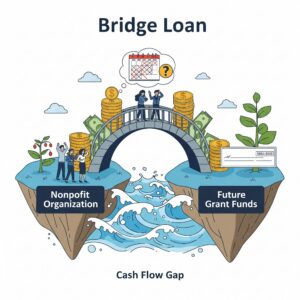
Think of bridge loans as the financial equivalent of a safety net. They’re short-term financing solutions designed specifically for the unique cash flow challenges nonprofits face.
When Bridge Loans Make Sense
Bridge loans shine in situations where you have committed funding that’s delayed. For example:
- Reimbursable grants: You’ve been approved for a government grant, but you need to spend the money before you can receive reimbursement
- Multi-year pledges: A major donor committed $500K over three years, but you need capital to launch the program now
- Pending estate gifts: You’re named in a will but the estate won’t settle for months
- Delayed government contracts: State budget issues mean your quarterly payment is running 60-90 days late
Real Impact Story
A Florida-based educational nonprofit faced massive funding delays when the state experienced widespread payment processing issues at the start of the school year. They used every resource available, but it wasn’t enough. A bridge loan from B Generous provided the immediate capital they needed to keep programs running while waiting for state payments to arrive.
Strategy #2: Establish a Line of Credit Before You Need It
Here’s a mistake too many nonprofits make: they wait until they’re in crisis mode to seek financing. By then, options are limited and terms may not be favorable.
A smarter approach? Establish a line of credit when times are good. It’s there when you need it, costs nothing when you don’t use it, and gives you incredible strategic flexibility.
How Nonprofits Use Lines of Credit
- Seasonal staffing needs: Hire additional staff for your busy season and pay them back when year-end donations arrive
- Early payment discounts: Take advantage of vendor discounts by paying invoices immediately
- Emergency expenses: Handle unexpected repairs, legal costs, or compliance requirements without derailing your budget
- Program expansion: Test a new initiative without waiting for grant approval
The key advantage? You’re borrowing on your terms, not out of desperation. You have the financial flexibility to say “yes” to opportunities and “no” to unfavorable terms.
Strategy #3: Time Your Capital Campaign with Strategic Financing
Capital campaigns are exciting—and exhausting. They require significant upfront investment in feasibility studies, campaign consultants, marketing materials, and staff time. Many organizations struggle to fund the campaign itself before the donations start flowing in.
Strategic financing allows you to:
- Hire experienced campaign staff who can dramatically increase your success rate
- Invest in professional donor research and prospecting tools
- Create compelling campaign materials that inspire larger gifts
- Launch your campaign at the optimal time, not when cash flow finally allows it
The return on investment can be substantial. A well-executed campaign with proper resources often raises 15-20% more than an underfunded effort.
Strategy #4: Convert Donor Pledges into Immediate Capital
Multi-year pledges are wonderful for building sustainable revenue, but they don’t help you launch programs today. You’ve secured a three-year, $300K commitment from a foundation—fantastic! But you need capital now to hire staff, sign a lease, and purchase equipment.
This is where pledge-based financing becomes valuable. Lenders who understand nonprofits can structure loans based on committed future revenue, giving you the capital to act immediately while the pledges are paid over time.
What Makes a Pledge Financeable?
- Written commitment from a creditworthy donor or foundation
- Clear payment schedule (monthly, quarterly, annually)
- Reasonable term length (typically 1-5 years)
- Documentation of the donor’s history with your organization
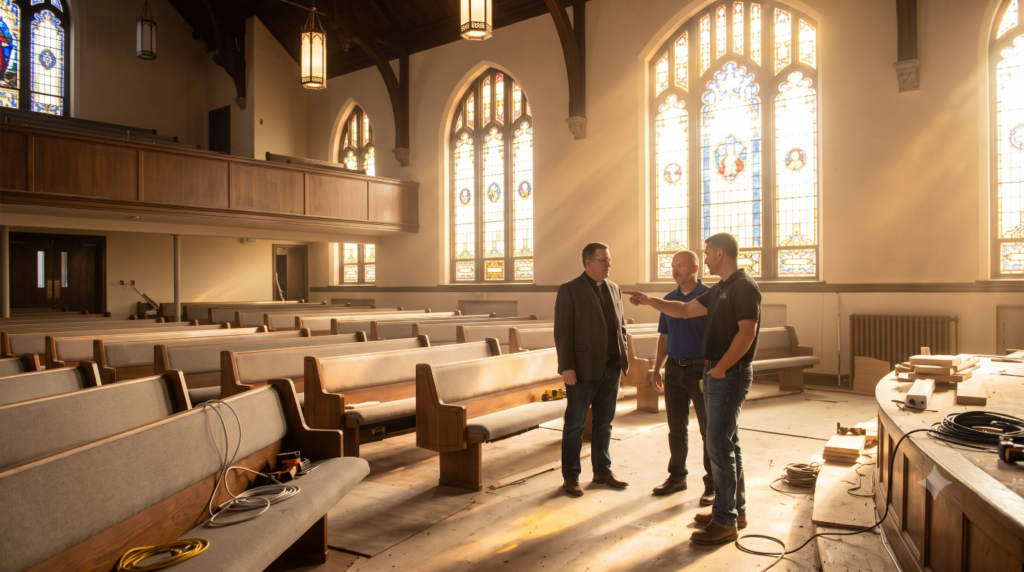
Strategy #5: Finance Your Facility Purchase or Renovation
Owning your facility can be transformative. You stop throwing money away on rent, build equity, and gain stability. But the upfront capital required—down payment, closing costs, immediate repairs—can seem insurmountable.
Nonprofit real estate financing has evolved significantly. Today’s options include:
- Term loans for acquisition: Finance 75-85% of the purchase price with terms up to 25 years
- Construction loans: Build your ideal facility with financing that converts to permanent debt upon completion
- Renovation financing: Update aging infrastructure without depleting your operating reserves
- Bridge-to-campaign loans: Purchase a building now, then pay off the loan with capital campaign proceeds
Did You Know?
B Generous has helped nonprofits finance the renovation and construction of synagogues, churches, theaters, youth sports facilities, schools, and healthcare facilities across America. From $25,000 to $100 million, we structure financing that makes sense for your mission.
Strategy #6: Manage Gala Expenses Without Touching Operating Funds
Your annual gala could net $500K, but it costs $150K to produce. That’s a fantastic return on investment—if you have the $150K to invest upfront. Too many organizations either skip high-ROI events because they lack startup capital, or they raid operating reserves and create cash flow problems.
Event-based financing solves this puzzle. You borrow the capital to produce a world-class event, then repay the loan immediately when proceeds arrive. Your operating budget remains untouched, and you can afford the auction items, venue, entertainment, and marketing that make the difference between a good event and a great one.
Events That Benefit from Strategic Financing
- Annual galas and benefit dinners
- Golf tournaments and sporting events
- Fundraising concerts and performances
- Auction events (live and silent)
- Walk/run/ride fundraisers
Strategy #7: Invest in Revenue-Generating Assets
Some investments pay for themselves. A new van allows you to serve 30% more clients. Updated software reduces staff time by 10 hours per week. A commercial kitchen enables a fee-for-service catering program that generates earned income.
These investments make economic sense—they improve efficiency or generate revenue—but they require capital you may not have sitting in your bank account. Equipment financing allows you to acquire income-producing assets while preserving your working capital for operations.
Smart Asset Investments for Nonprofits
- Vehicles for transportation or mobile services
- Medical equipment for healthcare nonprofits
- Kitchen equipment for meal programs
- Technology infrastructure and software systems
- Manufacturing equipment for social enterprises
- Office furniture and equipment for expanding teams
The best part? Many of these investments can be structured so the revenue they generate covers the financing costs, making them essentially self-funding.
Strategy #8: Prepare for the Unexpected with Emergency Capital Access

Nobody plans for a pandemic, natural disaster, or sudden loss of a major funder. But these shocks happen, and organizations without access to emergency capital often can’t survive them.
Building financial resilience means having multiple funding sources you can tap quickly:
- Operating reserves: Ideally 3-6 months of expenses, but that takes years to build
- Pre-approved line of credit: Instant access to capital when crisis hits
- Relationships with mission-aligned lenders: Partners who understand nonprofits and can move quickly
- Documented contingency plans: Know exactly what you’ll do if revenue drops 20%, 30%, or 50%
Lessons from Recent Challenges
During the COVID-19 pandemic, nonprofits with pre-existing access to capital were significantly more likely to survive and even thrive. They could shift operations quickly, invest in technology for remote work, and continue serving communities when traditional fundraising events disappeared overnight.
Strategy #9: Scale Successful Programs Faster
You’ve piloted a program that works beautifully. The outcomes are strong, participants love it, and you have a waiting list. But scaling requires significant upfront investment in staff, training, space, and marketing before the revenue catches up.
This is where growth capital becomes essential. Rather than growing painfully slowly as revenue permits, you can scale at the pace your mission demands and your community deserves.
What Growth Capital Can Fund
- Hiring additional program staff before government contracts begin
- Opening new locations in underserved communities
- Licensing your program model to other organizations
- Investing in marketing to reach more of your target population
- Developing technology that allows you to serve clients virtually
The math is straightforward: if your program costs $100K to operate and serves 1,000 people, but demand exists for 5,000 people, growth financing can help you serve 5x more people while building toward long-term sustainability.
Strategy #10: Partner with a Mission-Aligned Lender
Not all financing is created equal. Traditional banks often don’t understand nonprofit financial statements, fear mission risk, and impose terms that don’t match how nonprofits actually operate (spoiler: we don’t have quarterly profits to show).
This is why choosing the right lending partner matters enormously. Look for lenders who:
- Specialize in nonprofits: They understand your 990, restricted funds, and seasonal cash flow
- Offer flexible terms: Repayment schedules that match your revenue cycle
- Move quickly: Decisions in days or weeks, not months
- Require no personal guarantees: Your board members shouldn’t need to risk their homes
- Charge transparent fees: No hidden costs or surprise charges
- Support your mission: They see their role as advancing social good, not just making loans
Access Fast, Flexible Nonprofit Funding
B Generous is America’s #1 lending marketplace for nonprofits, trusted by thousands of organizations nationwide. We offer loans from $25,000 to $100 million with industry-leading terms designed exclusively for nonprofits.
- ✓ Free to apply with no upfront costs
- ✓ Applications take less than 30 minutes
- ✓ Preliminary credit decisions as early as one week after receipt of completed application package
- ✓ Usually no personal guarantees are required
- ✓ Flexible nonprofit friendly term
Join over 30,000 nonprofits who’ve requested more than $1 billion in funding through B Generous.
Making the Decision: Is Financing Right for Your Nonprofit?
Financing isn’t right for every situation, but it can be transformative when used strategically. Here’s a simple framework for making the decision:
Good Reasons to Consider Nonprofit Financing
- You have committed revenue (grants, pledges, contracts) that’s delayed
- An opportunity exists that will generate significant long-term value
- You’re investing in assets that improve efficiency or create earned income
- Waiting would mean missing a time-sensitive opportunity
- Your alternative is cutting programs or laying off staff
When to Pause and Reconsider
- You don’t have a clear repayment plan or identified revenue source
- You’re covering ongoing operational deficits rather than bridging temporary gaps
- The financing costs exceed the value of the opportunity
- You’re still building organizational capacity and financial systems
The best financing decisions are strategic, not desperate. They’re made with clear eyes about costs, benefits, and risks, and they align with your organization’s long-term mission and financial sustainability.
Your Next Steps
If you’re facing a funding gap, exploring a growth opportunity, or simply want to build more financial flexibility into your operations, now’s the time to explore your options.
Here’s what we recommend:
- Assess your current situation: What funding gaps or opportunities are you facing in the next 6-12 months?
- Calculate the numbers: What would strategic financing allow you to accomplish? What’s the return on investment?
- Explore your options: Connect with mission-aligned lenders who specialize in nonprofits
- Move forward confidently: Armed with information and options, make the decision that best serves your mission
The Bottom Line
Your nonprofit’s mission is too important to be held back by preventable cash flow challenges. While traditional fundraising remains essential, strategic financing gives you the flexibility to act quickly, seize opportunities, and maintain momentum even when revenue timing doesn’t align perfectly with your needs.
The nonprofits thriving today aren’t necessarily the ones with the largest endowments or the most donors. They’re the ones thinking strategically about all their capital options, using financing as a tool to amplify their impact rather than a last resort to avoid crisis.
Whether you’re considering a bridge loan to cover a temporary gap, establishing a line of credit for future flexibility, or financing a transformative facility purchase, the key is finding a partner who understands nonprofits and shares your commitment to making a difference.
Ready to Explore Your Funding Options?
B Generous has supported thousands of nonprofits with fast, flexible financing that keeps missions moving forward. From $25,000 to $100 million, we structure loans that work for your organization’s unique needs.
Takes less than 30 minutes • No upfront costs • No personal guarantees
About B Generous
B Generous is America’s leading nonprofit lending marketplace, empowering charitable organizations with fast, flexible access to capital. Since launching in 2021, we’ve received over $1 billion in loan requests from more than 30,000 nonprofits and have approved almost $100 million in funding for mission-driven initiatives across the country.
Our loans have expanded lifesaving healthcare access, launched groundbreaking community programs, strengthened faith-based organizations, and supported countless initiatives making real impact in the world today.
Disclaimer:
All examples, case studies, timelines, and cost calculations in this article are illustrative only and are not guarantees of terms, pricing, approval, or funding speed. Actual financing structures, interest rates, fees, and timelines depend on the borrower’s financial condition, documentation, collateral, and other underwriting factors. This content is provided for educational purposes and does not constitute financial, legal, or investment advice.